


This article published by Agence Norry analyzes the emergence of agentic commerce: AI agents capable of making online payments autonomously, without human intervention. It explains how Cloudflare Wallets works, the x402 protocol, the players shaping this infrastructure (AWS, Google, Stripe, Visa, Mastercard), and what this shift concretely means for websites and businesses that sell online.
The problem everyone ignored: AI agents couldn't pay
For two years, AI agents have gained remarkable capabilities. They search for information, write emails, book time slots, fill out forms. But they systematically stopped at the same place: payment.
To settle an invoice, access a paid API or buy an online service, an agent had to stop, go back to the human, wait for them to enter their bank details, then resume. Autonomy had a glass ceiling: the payment step.
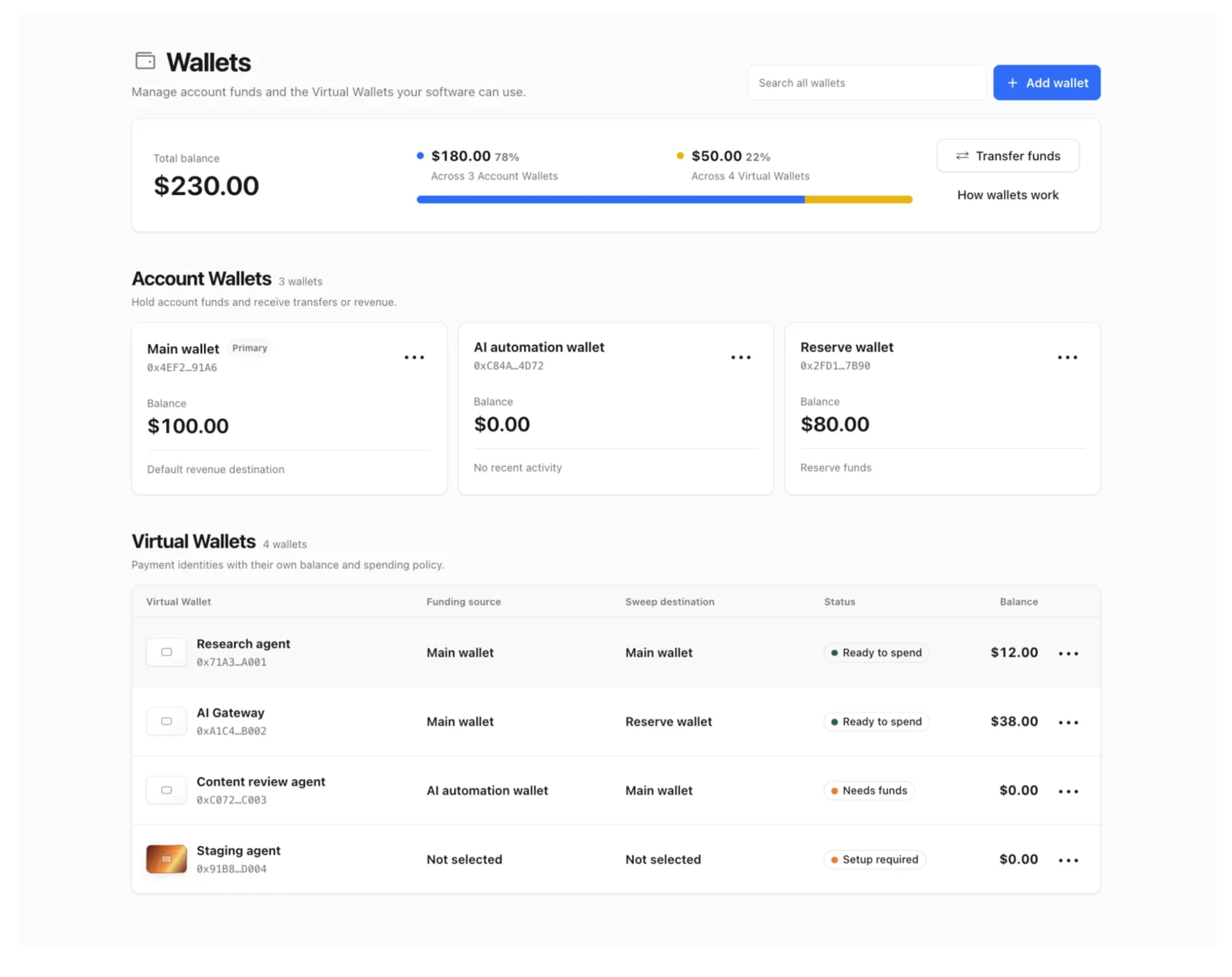
Cloudflare Wallets removes that ceiling. Each AI agent receives a stablecoin wallet, a budget defined by its human owner, and a list of authorized vendors. Within this framework, it can buy services, call APIs, and access paid data completely autonomously. Payment and access happen in a single step, in the same HTTP request.
How it works: the x402 protocol explained simply
Behind Cloudflare Wallets is an open protocol called x402, created by Coinbase. It relies on the HTTP 402 code, “Payment Required”, which has existed since the early days of the web without ever really being used.
With x402, when an AI agent accesses a paid resource, the server responds with an HTTP 402 indicating the amount to pay and the accepted stablecoin. The agent pays automatically from its wallet. The service becomes immediately accessible. Everything happens in the same request, with no redirect, no form, no human intervention.
The unit of value is the micropayment: about 14 cents per transaction on average. The standard has already processed 109.6 million transactions worth $15 million, according to an independent measurement by Visa and Artemis published in July 2026.
The architecture of Cloudflare Wallets
- Account Wallet: the human owner's wallet, where funds are loaded and managed. The equivalent of the company's finance department.
- Virtual Wallet: the agent's wallet, with a defined budget, a list of authorized vendors and a per-transaction cap. The equivalent of an employee's expense card with a limit set in advance.
- cloudflare.pay: a readable, traceable identity for each agent. The equivalent of a domain name, but for a bot.
Spending stops automatically when the cap is reached. The agent cannot spend more than its owner has authorized.
It's not just Cloudflare: the whole industry is building the same infrastructure
Cloudflare is the latest piece of a puzzle that has been taking shape for several months, with much bigger players.
- AWS (Amazon Bedrock AgentCore Payments, May 2026): agents on Amazon's platform can pay for APIs, data feeds and content in stablecoins via x402, in partnership with Coinbase and Stripe. Warner Bros. Discovery is already testing transactions on premium content.
- Google: launched its Universal Commerce Protocol with a broad base of partners, geared toward agentic shopping and agents reading product data.
- Visa and Mastercard: Visa launched TAP (Token Agent Protocol) as early as October 2025. Mastercard released Agent Pay. Both networks chose to integrate with the standard rather than compete with it.
- Stripe: integrates x402 via its Privy wallet and guides merchants in preparing their APIs for agentic access.
- Adyen: announced Adyen Agentic in June 2026, a modular API suite covering products, carts and payments across conversational commerce surfaces.
In production today: ChatGPT Instant Checkout, Amazon Buy for Me, Mastercard Agent Pay, Visa Intelligent Commerce and Coinbase Agent.market. Agentic commerce is no longer a roadmap. It's a market that exists.
What this concretely changes for your site and your APIs
1. Your site must be readable by a machine, not just by a human
AI agents acting as buyers don't browse like human users. They don't click. They don't scroll. They read data structures. A site without semantic markup (schema.org, structured product data, accessible API) is invisible to a buying agent.
This is what Google calls “merchant readiness”: your product data, your inventory, your prices and your checkout process must be readable by an agent, not just by a human on a screen.
2. Your paid content can become a directly monetizable asset
Cloudflare Monetization Gateway (launched on July 1, 2026) lets sites and APIs automatically charge for access to their content via x402. A premium article, a piece of business data, a real-time price feed: all resources an agent can now buy directly, for a few cents, without creating an account or entering a credit card.
3. Traceability and governance become immediate issues
When an AI agent buys something on behalf of your customer, who is responsible? How do you handle refunds, disputes, GDPR compliance? These questions are not yet resolved at industrial scale. Companies that prepare their governance now will have a head start.
Where do we really stand? A real market, but still early
$15 million in transactions since May 2025 is infinitesimal compared to global online commerce. Cloudflare Wallets' actual payment feature is marked “coming soon”. AWS AgentCore Payments is in preview. Most production deployments involve API micropayments, not full e-commerce purchases.
But within six months, OpenAI, Google, AWS, Stripe, Coinbase, Visa, Mastercard and Adyen have all built or integrated payment rails for agents. When players of this size move simultaneously in the same direction, it's not an experiment. It's a migration.
The question isn't “will this happen”. It's “how long until it affects me”.
The link with GEO: being visible to agents, not just to humans
Agentic commerce amplifies a trend we've been following from the start: AI agents are becoming intermediaries between your customers and you. First to get informed (GEO, AI Overviews), now to buy.
An agent looking for a provider for a B2B redesign will soon no longer ask only “who is good”, but “who is good and whose service I can contact and pay for directly”. Companies that have structured their digital presence to be readable, citable and transactable by agents will be the first to capture this flow. It's the natural next step for GEO: moving from visibility to transaction.