ChatGPT
 Grok
Grok
 Perplexity

GEO
8 min
AI Overviews in France: what just changed in Google, and what your business needs to do now

Pauline Viseur

.avif)
The rise of no-code is transforming the way businesses design, deploy, and iterate their digital tools. With platforms like Webflow, Bubble, or Make, teams can create sites, applications, or automations without depending on developers, reducing time, costs, and technical barriers. This article analyzes the reasons for this massive adoption, agility, autonomy, speed and competitiveness, and shows why no-code is becoming a strategic lever for modern businesses.
No-code is in the process of revolutionize web and software development. With tools like Webflow, Bubble, Airtable, or Zapier, businesses can create sites, applications, and automate tasks without writing a single line of code.
But why is this movement growing so much? What are the concrete advantages for businesses?
The No-code brings together a set of tools for creating digital products without traditional programming. Through interfaces visual and intuitive, it allows non-technical profiles to design sites, apps, or automate processes.
Examples of popular no-code solutions :
No-code does not completely replace developers, but democratizes access to digital creation by speeding up processes.

Fast development : A project that would take several months in traditional coding can be designed in a few days with no-code tools.
Flexibility : Changes and iterations are easy without going through a complex development cycle.
Less dependency on developers : Small businesses and startups can create their own tools without immediately recruiting a tech team.
Less technical maintenance : No-code platforms manage updates and hosting, reducing maintenance costs.
Marketing, product, or HR teams can create their own tools, without depending on the IT department.
Autonomy : The company is becoming more agile, with teams that are able to quickly test new ideas.
Process automation : With tools like Zapier, repetitive tasks are automated, freeing up time for actions with higher added value.
Scalability : Numerous no-code solutions make it possible to Scaler by gradually adding more complex features.

The no-code adapts to numerous business needs. Here are a few concrete examples:
Creation of websites → Webflow allows companies to design efficient and well-referenced sites without complex development.
Application development → With Bubble, startups can create a Functional MVP in record time.
Automating tasks → Zapier or Make link different tools to avoid repetitive tasks (e.g. automatically sending an email after a purchase).
Database Management → Airtable makes it possible to create custom CRM systems without coding.
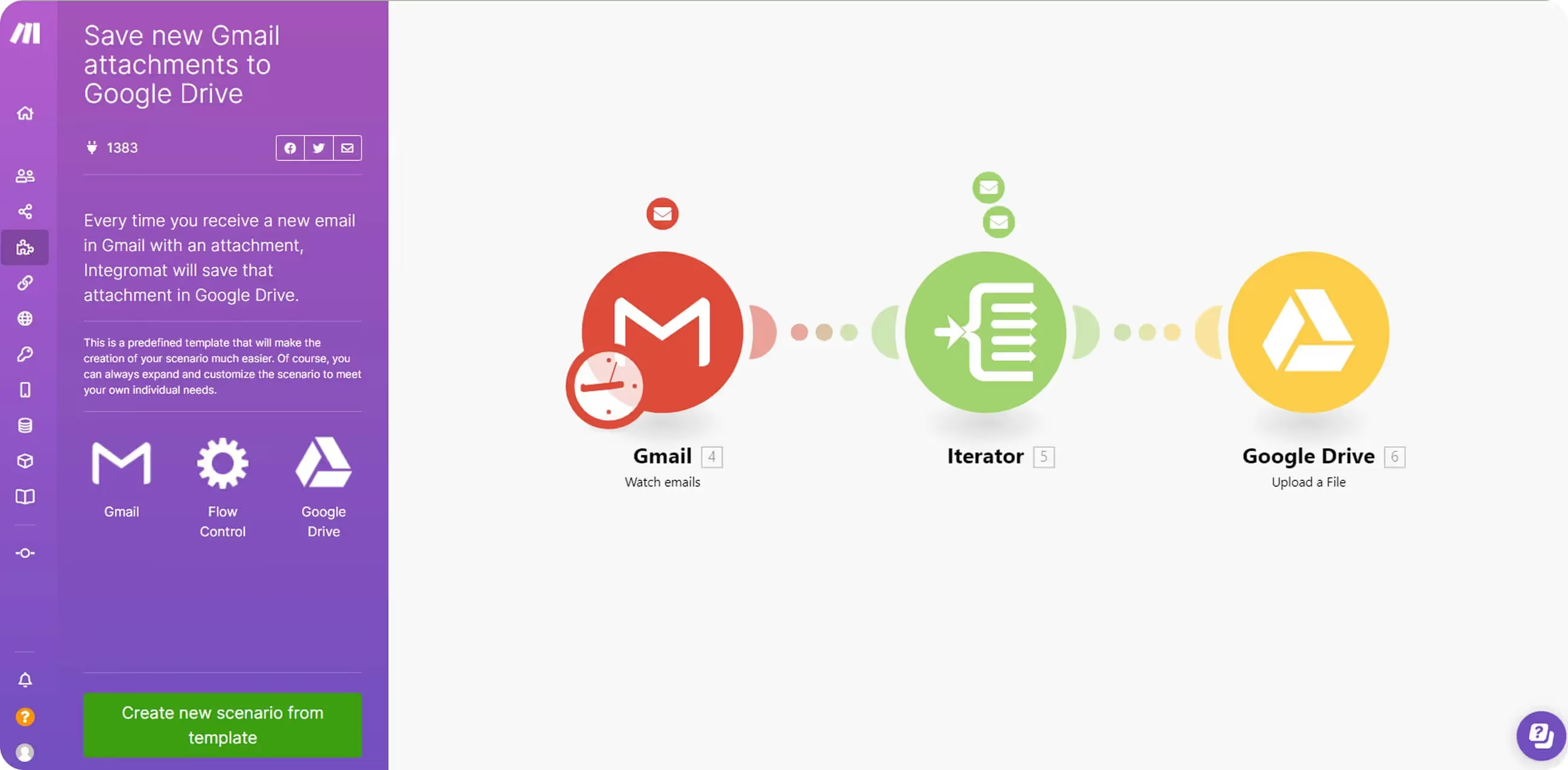
The No-code allows you to create without any line of code, while the Low-code offers a hybrid approach where programming concepts may be required for advanced functionalities.
When should you choose one or the other?
With the rise of SaaS and digital transformation, no-code is emerging as a strategic lever for businesses.
The trends to follow :
The no-code allows businesses to innovate faster, reduce costs and gain autonomy. This movement, far from being just a fad, is transforming the way businesses design and operate their digital tools.
Chez Norry, we support companies in the creation of successful Webflow sites and optimized thanks to no-code.
Businesses are adopting no-code to gain autonomy, reduce delivery times, control costs and iterate more quickly. This allows product and marketing teams to prototype and deploy solutions without relying on traditional development teams. At Norry, we help businesses take advantage of no-code with powerful Webflow solutions.
For a startup, no-code means the ability to quickly launch a test version, adjust based on user feedback, and pivot without exorbitant costs. With Webflow, you can test landing pages, build your site, and validate ideas without waiting for long dev cycles. See our Webflow creations for startups.
No No‑code does not completely replace traditional development, but it greatly reduces dependencies for standard use cases. For very specific functionalities or complex needs, a tailor-made architecture may always be necessary. At Norry, we combine no-code and technical expertise as needed.
Popular no-code tools include Webflow for websites, Bubble for apps, Make and Zapier for automations, and Airtable for lightweight databases. At Norry, we use these tools according to business needs to accelerate projects.