ChatGPT
 Grok
Grok
 Perplexity

GEO
8 min
AI Overviews in France: what just changed in Google, and what your business needs to do now

Pauline Viseur



The article explores how the web design ecosystem is in full transformation with the arrival of Figma Sites, the integration of AI, and the evolution of CMS systems. He explains how these technologies enable teams to prototype, design, iterate, and deploy faster than ever, without sacrificing performance or quality. By combining no-code tools like Webflow with AI-based workflows, businesses gain efficiency, agility, and creativity.
We were already fans of Figma. There, we take our ticket to London (and not just for Fish & Chips).
Figma Config 2025 has unveiled a series of announcements that are maddening the ecosystem of web design. Among the key new features: Figma Sites, Figma Make, a Integrated CMS, and tools designed for marketing teams and illustrators.
Next week, we will be on site at the London config to test all of this. In the meantime, here is our decryption.

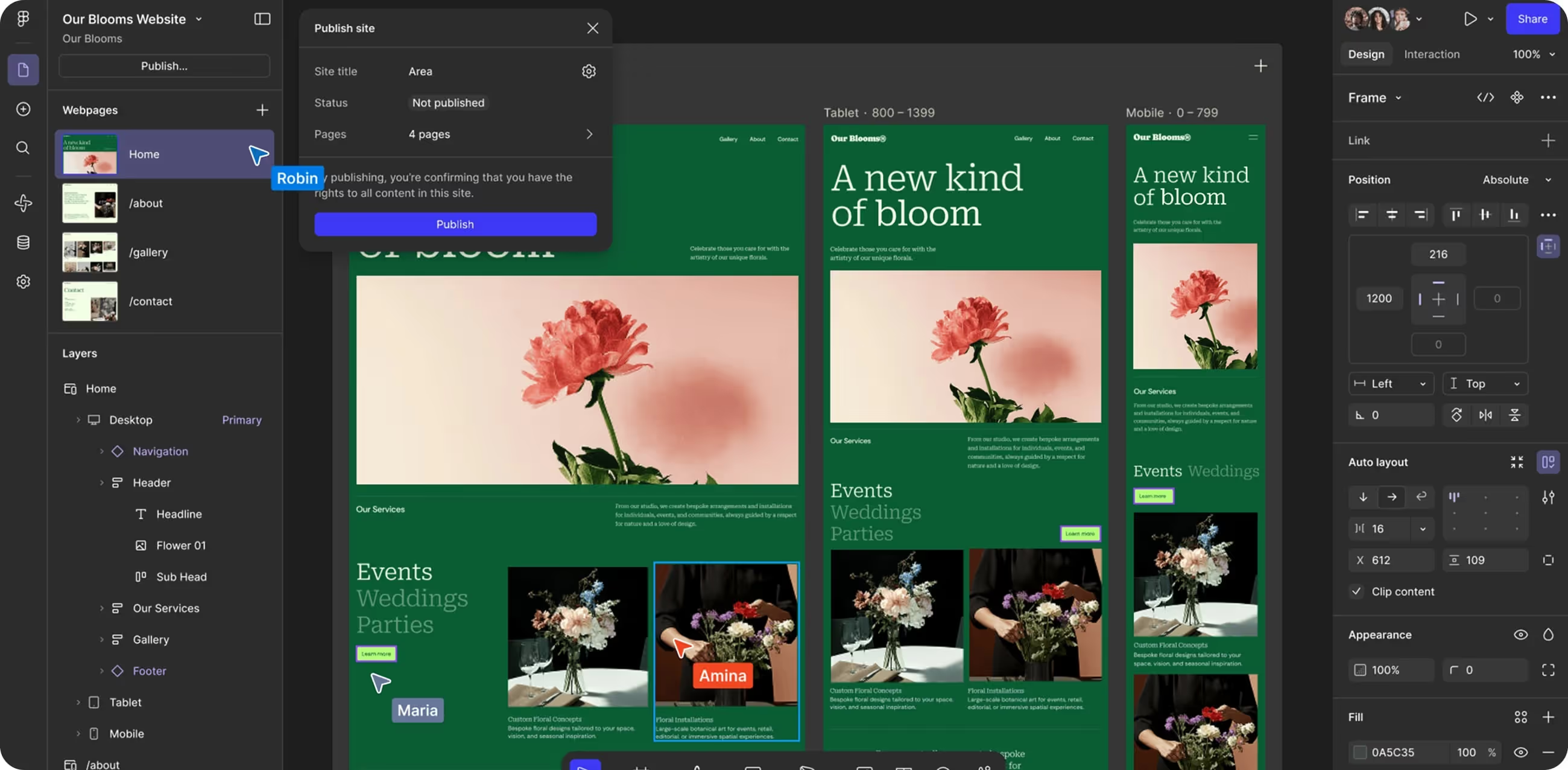
With Figma Sites, the ambition is clear: to transform a design into a responsive and publishable site, in one click. The tool is based on CSS grids, of synchronized components, and a logic Responsive design native with cascading breakpoints.
Key features:
Figma vs Webflow ? For now, Webflow remains more advanced for professional use, but Figma is approaching dangerously with a simpler and more direct logic.
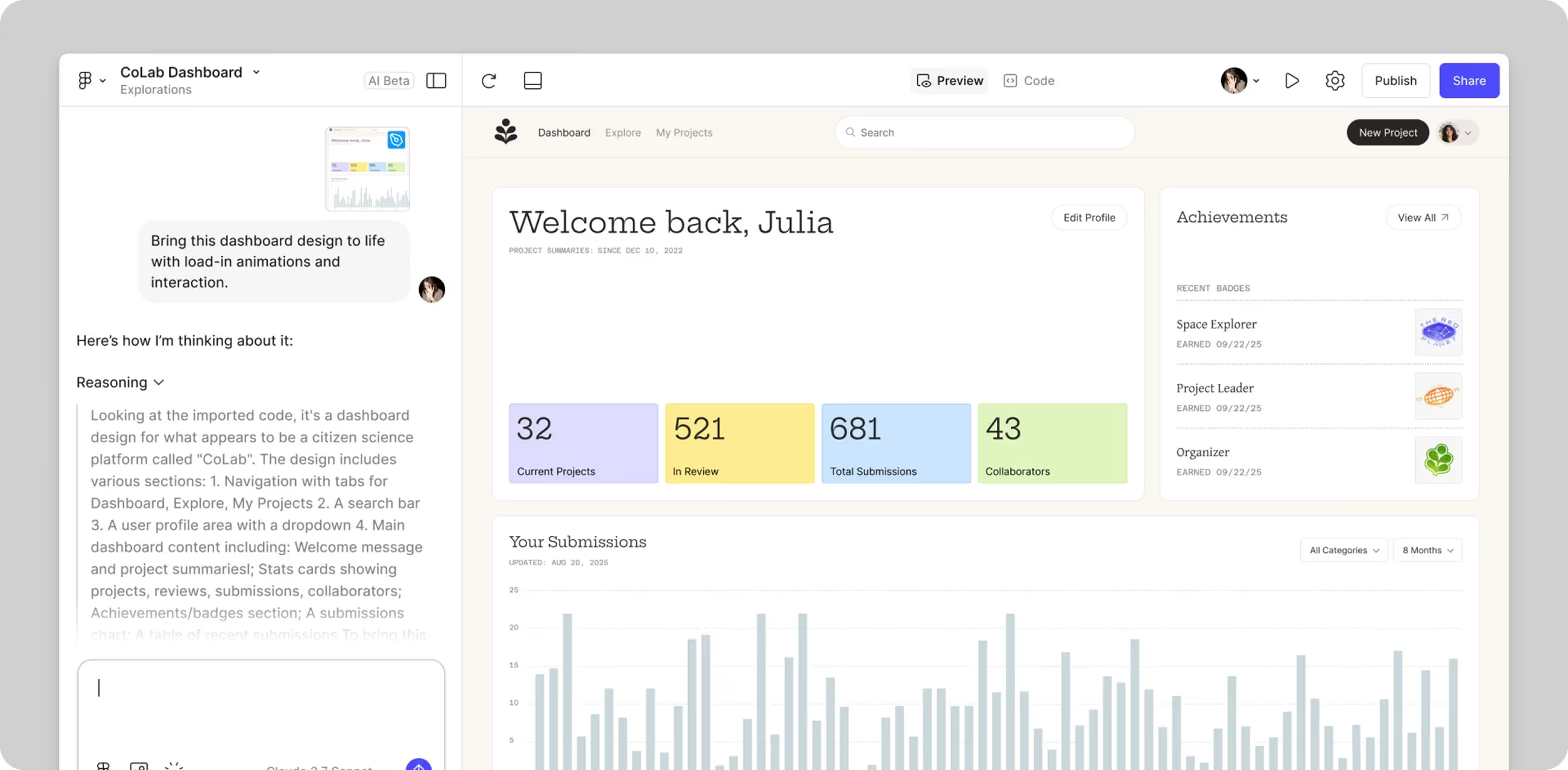
Figma Make introduces artificial intelligence at the heart of the creative process. AI makes it possible to:
It is a revolution for anyone who wants to accelerate their Design to website without sacrificing quality or consistency.
Figma Buzz target marketing teams with templates, mass editing, and generative AI.
Figma Draw turns Figma into a real alternative to Illustrator with vector brushes, graphic effects, and advanced typography.
The message is clear: stay in Figma, we manage the rest.

Not yet. But for Landing pages, simple sites or internal projects, Figma Sites could already do the trick.
We will be closely watching the future of CMS Figma and the quality of the rendering (SEO, performance, accessibility).
By aiming broad (design, dev, marketing, illustration), Figma is following in the footsteps of Adobe. But unlike Adobe, it offers an integrated, fluid and collaborative experience.
We will test the functionalities on site, but one thing is clear: Figma Sites and Figma Make mark a major advance in the AI-assisted web design.
Our preferred tool remains Webflow, especially for its rich ecosystem (advanced SEO, complete CMS logic, fast hosting), but Figma is becoming a serious competitor to watch very closely.
Figma Config 2025 is a turning point. It's no longer just a design tool.
It is a complete web creation platform, with integrated AI, CMS, marketing and animation.
The border between design and web development has never been so fine.
And we can't wait to see what happens... live in London!
Figma Sites makes it possible to move from design to a functional web interface without going through code, by synchronizing Figma components with ready-to-publish pages. This drastically shortens the cycle between prototype and live site. At Norry, we're taking advantage of Figma and Webflow to reduce iterations and improve consistency between design and development.
AI now makes it possible to accelerate the generation of ideas, texts, page structures or UX insights without technical effort. By combining AI and Webflow, teams can produce faster iterations and test concepts without creative bottlenecks. Discover our SEO + AI expertise.
No, Webflow and Figma meet complementary needs: Figma is a design and prototyping tool, while Webflow makes it possible to transform designs into fully functional sites. Together, they offer a smooth production chain. Our advanced Webflow integrations.
A modern CMS like Webflow's makes it possible to separate content from presentation, to facilitate updates without coding, and to integrate collaborative workflows. This reduces errors, speeds up publications, and improves site maintainability.