
This article analyzes PayFit's rebrand in July 2026. It explains why a rebrand is never an aesthetic decision but the consequence of a business transformation, describes the signals that show a company's image is lagging behind its reality, and lays the groundwork for what rebranding properly means in 2026, including on AI engines.
What PayFit just announced
PayFit has 22,000 client companies in Europe, €80 million in ARR, and a simple initial promise: automate payroll so SMBs can free themselves from it without going through an accounting firm. For ten years, that promise held. Until PayFit publicly acknowledged what many players in the sector already knew: payroll remains, in 2026, a job for experts before it is a job for algorithms.
The unicorn is pivoting: it is gradually moving away from pure self-service to offer outsourced payroll and HR management. Its clients no longer manage their own payroll through the interface; they delegate operations to an in-house team of 200 payroll experts, supported by PayFit AI. It is no longer software. It is a service.
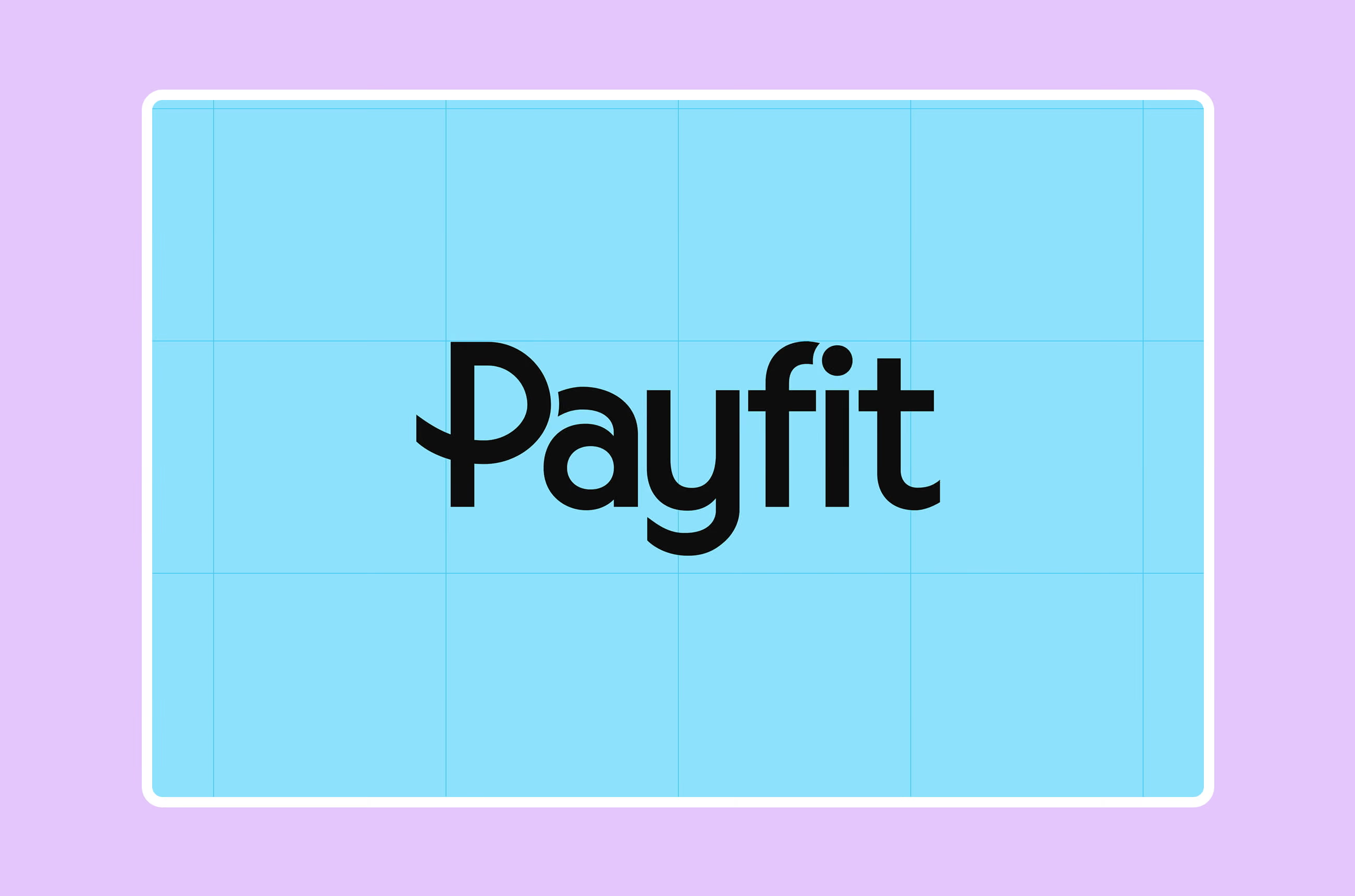
This change in offer called for a change in image. A new logo designed by Sébastien Navizet (The Design Crew), and a new visual identity by the agency Klimb. New illustrations with a human touch, a new palette, a new visual system. An identity that finally says what PayFit has become: an expert brand, close to the companies it supports, and resolutely focused on people as much as on tech.
PayFit is aiming for €150 million in revenue in 2028. The rebrand is not a comms project. It is a piece of the growth strategy.

The rebrand is not the cause. It's the consequence.
It's the mistake I see most often. Companies think of rebranding as an aesthetic decision, a desire for change, sometimes even a project they postpone because it isn't urgent. But you don't rebrand because you're bored of your logo. You do it because something has changed in what you are, and the image hasn't followed.
At PayFit, the signal is crystal clear. After a decade of promising total payroll automation, the company publicly acknowledged that regulatory complexity, edge cases and customers' expectations for human advice made pure scalability impossible. It chose a tech-and-services hybrid over pure self-service. That's not a minor adjustment. It's a change in the fundamental promise.
A new promise calls for a new image. Not the other way around.
The numbers confirm the stakes. According to a PwC and Brand Finance study that tracked 614 rebranding campaigns between 2022 and 2025, 38% of rebrands fail to reach a positive ROI. The main cause in 61% of failures: a gap between the new identity and the real expectations of existing customers. PayFit avoids this trap because its rebrand is heading in the right direction. The business transformation is real and already under way. The image follows.
A pattern seen across every sector
PayFit is not an isolated case. 87% of S&P 100 companies have undergone a rebrand. 74% of large companies do so within the first seven years of their existence. It isn't a fad. It's a structural necessity tied to growth.
A company is created with a clear value proposition, a precise target, an image consistent with what it is at that moment. Then it grows. It wins bigger clients. It diversifies its offer. It hires. It changes scale without realizing it. And its website stays frozen on what it was three years ago.
The problem isn't aesthetic. It's commercial. A prospect landing on a website that tells an old version of the company doesn't understand what it really does today. Salespeople make up in meetings for what the website should already have done.
Campaigns run after a rebrand deliver 2.1 times more awareness gains than campaigns run without a branding change. In some documented cases, alignment between identity and real offer generated up to 49% more conversion (Startup Edition, 2026). An image that lags behind reality is value lost every day.
The signals that never lie
After supporting companies through this type of transition for years, I've learned to recognize the signals that show a rebrand has become necessary.
- The offer has evolved but the website still explains it with the old words. This is exactly the PayFit case. They were no longer just a payroll tool, but their communication from two years ago didn't yet show the complete HR platform they were building. When the offer changes category, the image has to change category too.
- The customer base has changed profile but the messaging hasn't followed. A company that targeted very small businesses at the start and now works with mid-sized companies or large accounts can't keep the same register. The level of sophistication expected isn't the same, and prospects sense it immediately.
- The internal team no longer recognizes itself in the image. This is often the most underestimated. When your salespeople apologize for your website before a meeting, the problem is real and it costs you. 60% of consumers avoid companies with an outdated or inconsistent image, even when customer reviews are positive (VistaPrint, 2026).
- AI engines don't recommend you, or describe you with the old words. This is the most recent and most underestimated signal in 2026. AI reads what your website says about you. If your home page describes a self-service payroll tool when you've become an outsourced HR service, ChatGPT, Gemini and Perplexity will present you as a self-service payroll tool. Your digital image is read and relayed, not interpreted.
What rebranding well means in practice
A failed rebrand is a new logo on an old positioning. A beautiful style guide on messaging that hasn't changed. A redesigned website that hasn't solved the underlying problem. Failed rebrands almost always share the same root cause: a gap between the chosen image and the reality of what the company has really become.
A successful rebrand is alignment across three levels.
- What you really are in 2026, with your current offer, your current clients, your real positioning in the market.
- How you express it visually and verbally, with an identity and messaging that match what you've become, not what you were three years ago.
- How this new image becomes visible where your prospects look for you: on Google, on AI engines, on LinkedIn. A rebrand that doesn't take GEO into account in 2026 is an incomplete rebrand.
Brand consistency can increase revenue by 10 to 20%. Consistent brands record three times the sales volume of fragile brands (Millward Brown / Lucidpress). Those aren't image figures. They're business figures.
The question to ask yourself now
PayFit's rebrand isn't an anecdote about a unicorn changing its logo. It's a signal about what the market expects in 2026: alignment. Between what a company does and what it says. Between its real offer and the image it projects. Between its current clients and the messaging it uses.
The question I systematically ask the executives I work with: if a prospect searched ChatGPT for what you really do today, would your company show up? And if it does, would it be described with the right words?
If the answer is no or I don't know, that's already an answer.