
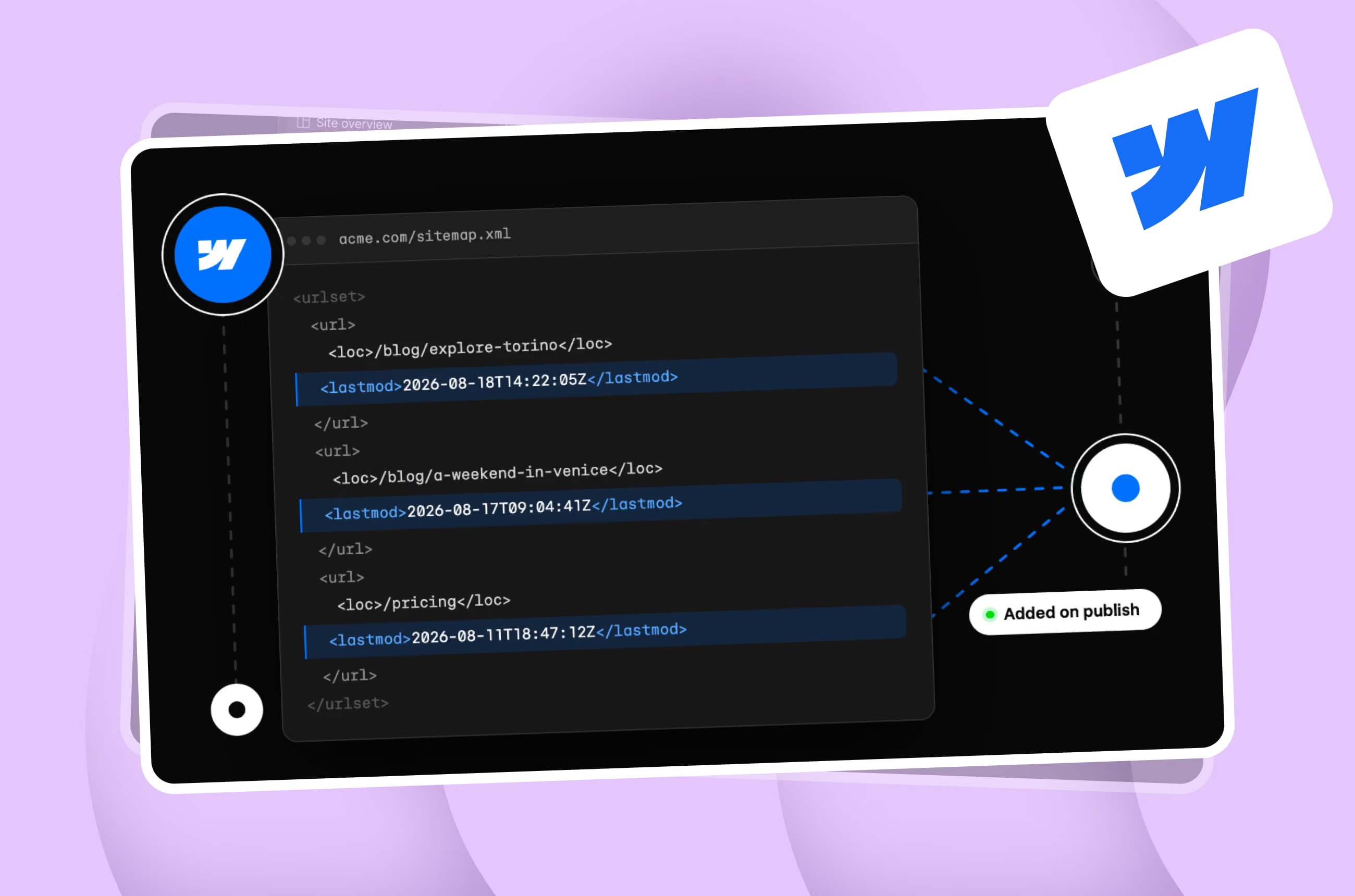

This article, published by Agence Norry, analyzes Webflow's August 20, 2026 update: the addition of the lastmod timestamp to automatic sitemaps. It explains what a sitemap is, what this timestamp changes for Google indexing and for AI engines, and what digital teams on Webflow should take away.
What exactly is a sitemap?
A sitemap is an XML file listed at the root of your site (accessible via yoursite.com/sitemap.xml) that tells search engines which pages exist on your site and how they are organized. It is one of the first things Googlebot reads when it crawls a site.
A well-built sitemap speeds up the indexing of new pages and helps crawlers prioritize what they visit first. This is particularly important for large sites or sites with CMS collections that change frequently.
Webflow generates this file automatically for all published sites. Until now, this sitemap listed URLs without specifying when each page was last updated. That is what the August 20 update changes.
The <lastmod> timestamp: small code, big impact
The <lastmod> tag is an optional field of the sitemap.org protocol. It indicates the date and time a page was last modified. Here is what an entry in the sitemap looks like before and after the update:
Before (without lastmod)After (with lastmod)<url><loc>https://yoursite.com/blog/article</loc></url><url><loc>https://yoursite.com/blog/article</loc><lastmod>2026-08-20T09:15:00+00:00</lastmod></url>
This tells the crawler two things: this page exists, and it was modified on a specific date. If the date is recent, the crawler will prioritize it on its next pass.
What this changes for Google
Googlebot operates with a crawl budget: a quota of pages it can crawl on a site within a given time. For large sites with hundreds of CMS pages, this budget becomes a real issue.
Without <lastmod>, Google had to work out for itself which pages had changed, by revisiting all of them at regular intervals. With <lastmod>, it immediately knows that one page was modified yesterday and another hasn't changed in six months. It concentrates its resources on URLs that are genuinely new or updated.
In practice: a blog post published today can be indexed within hours rather than days. An updated service page climbs back up the results faster.
Webflow specifies that the timestamp is tracked per page and not per global site publish. Publishing a single article does not reset the lastmod of all the other pages, which matters for crawl budget efficiency.
What this changes for AI engines
This is the most interesting aspect of this update, and the one Webflow itself highlights: <lastmod> matters as much to generative engines as it does to Google.
Google's AI Overviews, Perplexity and ChatGPT search use crawlers to read and index the sources they will cite in their answers. These crawlers work with the same logic as Googlebot: they prioritize recent, frequently updated sources.
Without <lastmod>, an AI engine had no reliable way to tell an article published yesterday from one published two years ago. With <lastmod>, it knows that your latest article was published on August 20, 2026. It will favor the most recent content on fast-moving topics.
In a context where visibility in AI answers is becoming a strategic issue, being identified as an up-to-date source is an additional credibility signal.
The comparison: sitemap without lastmod vs with lastmod
Without <lastmod>With <lastmod>Google crawlVisits all pages at fixed intervalsPrioritizes recently modified pagesIndexing delaySeveral days to several weeksA few hours after publishingCrawl budgetSpread across the entire siteConcentrated on genuinely new URLsAI enginesNo freshness signalSource identified as up to date, more likely to be citedOutdated content cited by AIHigh riskReduced riskReverse proxyDefault base URLConfigurable canonical URLSitemap update triggerGlobal publish onlyPage-by-page publish
The three improvements in detail
- The per-page <lastmod> timestamp. The main improvement. Each URL in the sitemap now includes the exact date and time of its last publish.
- The canonical URL as the reference domain. For sites using a reverse proxy, it is now possible to use the canonical URL in the sitemap, avoiding duplicate content issues.
- Sitemap updated on every page publish. Publishing a single page updates the sitemap immediately, without waiting for a global site publish.
What this means for Webflow sites
The good news: you don't have to do anything. The update is automatic for all Webflow sites published since August 20, 2026.
What you can do in addition: check that your sitemap is submitted in Google Search Console. For sites with large CMS collections, this is particularly useful. For sites using a reverse proxy, check that your canonical URL is properly configured in Webflow's SEO settings.
With this update, Webflow is part of a broader approach it calls AEO (Answer Engine Optimization): all the platform features geared toward visibility in AI engines.
The link with GEO: freshness and credibility go hand in hand
AI engines favor credible, up-to-date sources. <lastmod> is a freshness signal that AI crawlers can read immediately, without having to analyze the content to guess its date.
For sites that publish regularly, this is a complementary advantage to GEO work: not only is your content well structured and citable, but crawlers also know it is recent. The two signals reinforce each other.
It is also one more argument for maintaining a regular publishing cadence. A site whose pages are all dated 2024 sends the opposite signal. A site whose pages are regularly updated is seen as a living source.